Eating people, it’s so stigmatised. Even though our not-so-distant ancestors ate each-other both ceremoniously and pragmatically, today our cannibalistic streak lays dormant, only surviving in some indigenous tribes where cannibalism has become a hush-hush culinary quandary. As faux pas go, the Papaya New Guinean appetite for human flesh is equivalent to the British biscuit dunker; a mildly embarrassing habit, shoved under the carpet, yet a deeply ingrained carnal preset.
The mere mention of eating someone triggers all those hardwired aphorisms. As humans, we’re the top of the food chain, naturally off-menu and strictly forbidden. Only a few other animals are extended such grace: the royal swan, the angelic horse, the domesticated fluffy ones – the rest can be pumped full of hormones, caged, fed their own shit and led single file into a blunt axe.
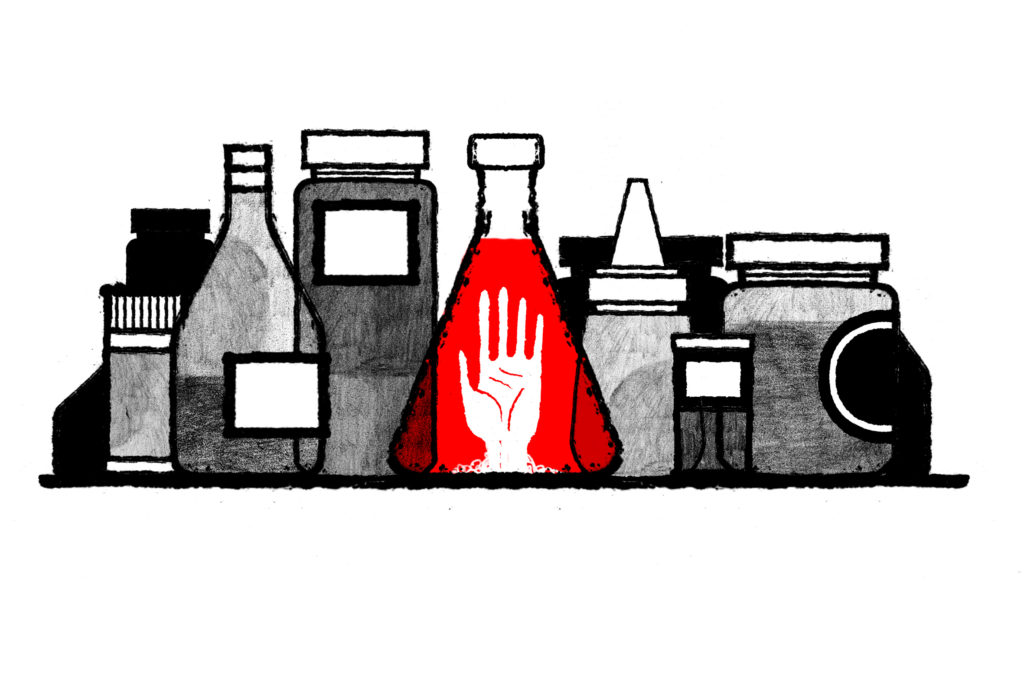
But paradigms shift, revolve and skid abruptly into new territory. It won’t be long before we’re salivating at the tray of human meat hors-d’oeuvres at the school fete.
Science is now accelerating beyond the realms of fiction. A bladder grown from a stem cell, a face rebuilt, a torso transplanted, a knob lengthened, a mouse with human ears – scientists are reaching for the sky and plucking life-saving creations and horrid abominations in the same hand. Biotech and genetic engineering are making quantum leaps. Frankenstein’s creator is no longer a zany genius – he’s been reclassified as a draconian relic; a tepid GP of yesteryear, with an outdated stethoscope swinging like a noose, a fitting metaphor for the medical old guard.
The ability to manipulate nature and grow outlandish creations in isolation has opened unfathomable possibilities and sparked fuming uproar. Outside the lab, moral debate bubbles angrily: Should we be messing with nature’s DNA – should the white-coats be playing God?
But whilst culturing body parts in test tubes and creating new outlandish species have enraged some, it might be the solution that enables us to sustain our hugely greedy lifestyle, especially the demand for meat.
As opinion swings from hysteria to pragmatism, the acceptance of cell manipulation, self-sustainability and regenerative biotechnology is spreading. Supermarkets are prepared for this sweeping public approval, foreseeing the increased demand for more efficient, humane and sustainable meat production.
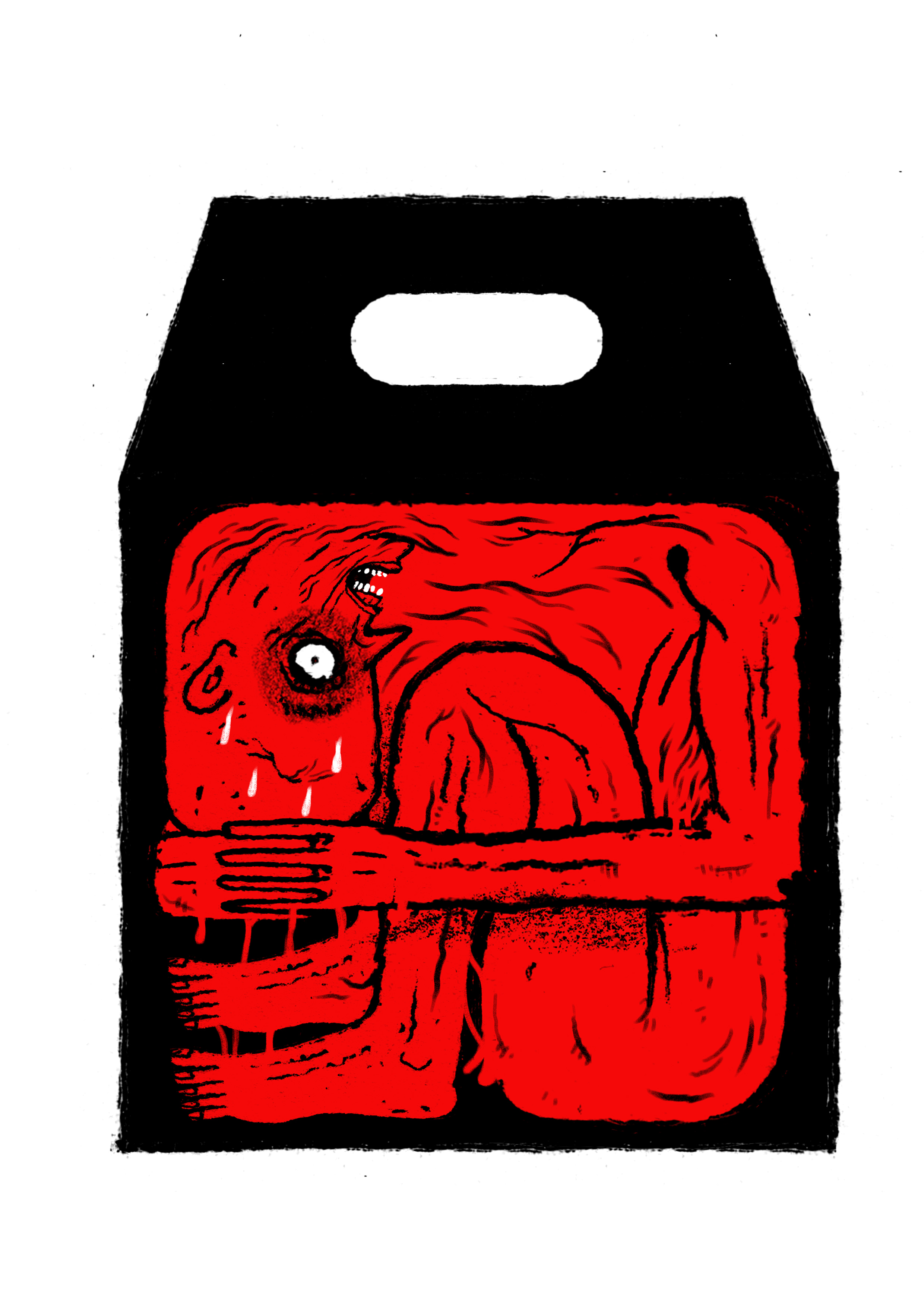
Human meat growth boxes – the MeBox – will soon be available. MeBoxes grow boneless human limbs, cultured from our very own stem cells, with the sole purpose of eating. Housed in an incubation tank sat next to the fridge, the MeBox cultivates the owner’s stem cells right through to dinner sized portions of human meat. The advent of self-consumption has arrived; the age of Auto-Edibility is upon us.
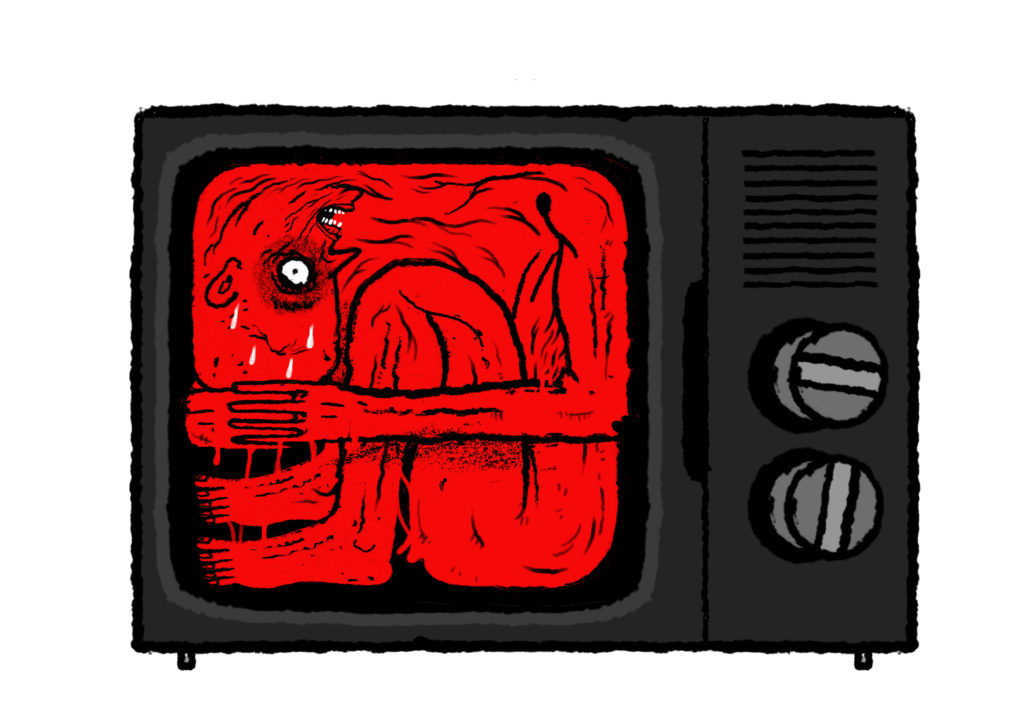
Meat consumption without the moral reflux of supporting factory farming or cannibalising another human – this is the next phase for carnivores.
Eating an extension of yourself – a remote limb – is as ethically sound as riding a biodegradable unicycle to work: completely harmless, self-sufficient, difficult at first and slightly weird.