What better way to spend our final decrepit years than by unleashing a lifelong alter-ego? Live out that secret dream; let the repressed fantasy awaken from the belly of true desire. Where would our imagination take us? Probably into the domain of video games, where our most extreme character traits take refuge. A career criminal marauding GTA’s San Andreas…a medieval warrior beheading goblins in World Of Warcraft, or venting some low-fi fetish for collecting 8-bit pixelated fruit.
Of course, the reality is somewhat more sombre; bitterly stumbling to the finish line as the body fails and relatives lose patience. These final years are morbidly punctuated with pills, loneliness and bed baths. When the simplest ablution requires a tightly project managed and fully staffed procedure, many would rather be euthanised than plod the last few humiliating laps.
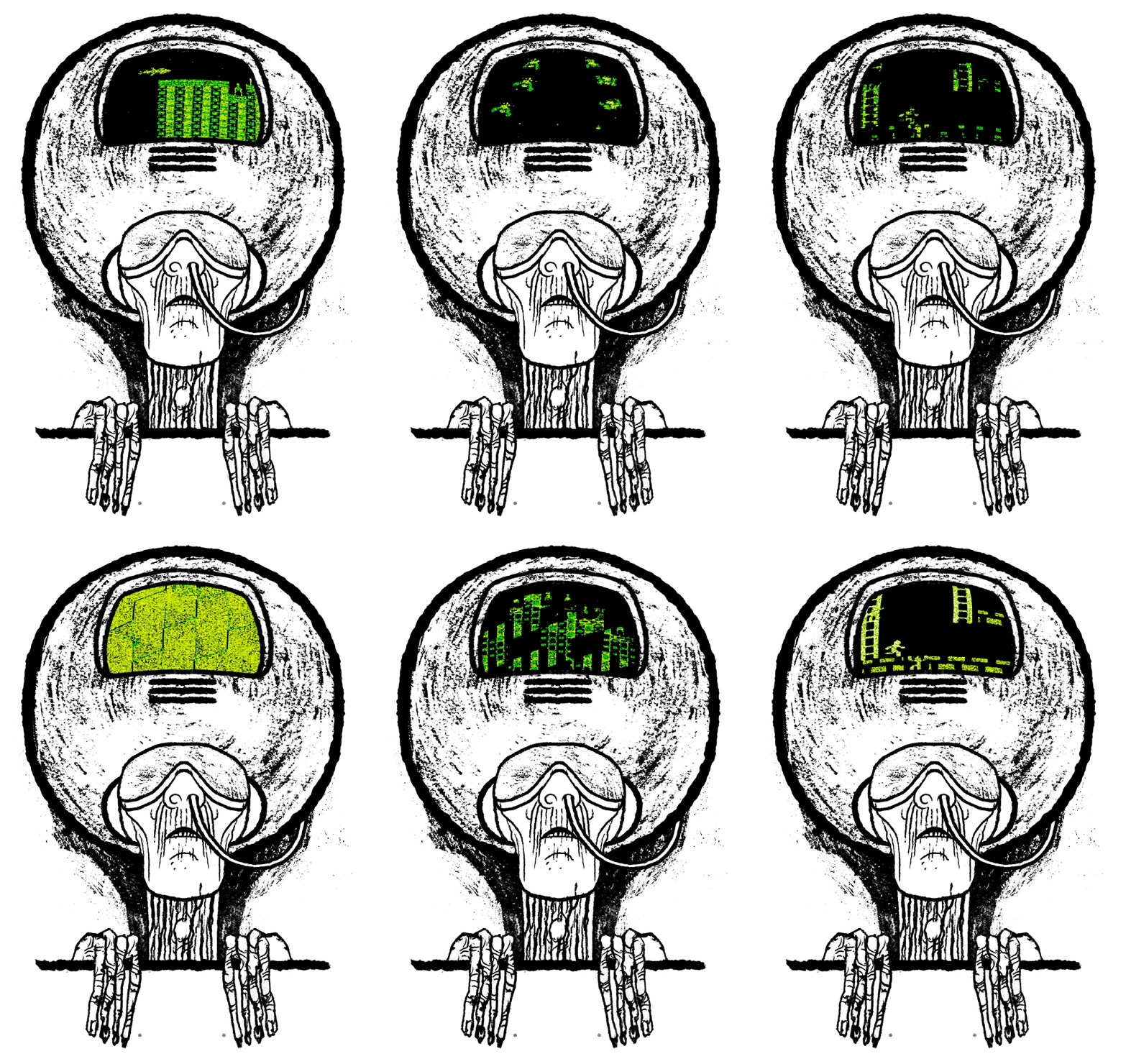
But life’s curtain call has been handed a new lease of life. Virtual reality gaming is being repurposed into new territory. Rather than sit out the last throes of life as a bedridden corpse, the opportunity to be entered into a Palliative Gaming Pod poses the next frontier in age care. The advent of Thought Control Technology now enables the incapacitated – but able-minded – to enter an alternate dimension.
The old person is induced into a coma, then uploaded physically and neurologically into the pod. A network of cables, hypodermic drips and electro pads control medication, sustenance, nutrition, excretion and the extra sensory experience of their preferred virtual games.
Once in the pod, they don’t leave until it really is game over. Completely immersed in the digital world, they control the game via thought alone. Any communication with the outside world must be done within the confines of the game. Relatives must, therefore, create avatars, which are coded and implanted into the game. It’s an expensive and labour intensive process – totally daunting for those unfamiliar with being digitised and injected into an unknown world. But beta-testing suggests this surrogate communication actually improves interaction; the digital intermediary proving less confronting than real life.
As the final generation of technophobes dies off, marketers are confident the Palliative Gaming Pod will become the go-to age care facility. We’ll soon have OAPs who have spent the majority of their lives facilitated by computers; making the step from the real to the virtual world the perfect exit strategy.
The Pod represents a buffer zone; a rumpus room before departing, where fantasies replace rigmarole, and the restraints of reality vanish.